
Location

Book a Tour

For Parents

Contacts
Location
Book a Tour
For Parents
Contacts


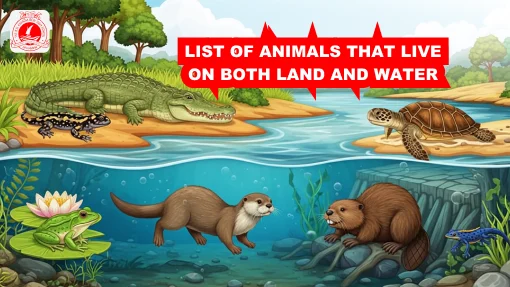
Every living organism on this planet is a part of a life cycle. From the plant life cycle to the human and animal life cycles, everyone has their own life expectancy, survival skills, and nourishment habits. You cannot compare one species with a different kind of species, as that comparison is not practically possible. Various animals live on land and in water. This kind of uniqueness makes kids curious, and they just want to hop onto those bulky encyclopedias just to get an answer. Not to worry, this blog will provide you with a list of land and water animals, their names, and many more such things.
| Animal | Scientific Classification | Habitat |
| Frog | Amphibian | Ponds, swamps, deserts, forests |
| Crocodile | Reptile | Rivers, brackish waters, lakes, and nearby banks |
| Salamander | Amphibian | Streams, dams, woodlands, and under logs |
| Sea Turtle | Reptile | Open oceans, coastal waters, sandy beaches |
| Beaver | Mammal | River, lakes, and adjacent riparian zones |
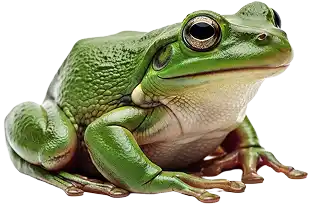
A frog is the best example of an animal that lives on land and in water. In the beginning, they are just tiny tadpoles that live in water and breathe through gills. After a while, they go through a change called metamorphosis and grow into adults that live on land. On land, they breathe through their lungs; however, their moist and permeable skin conditions allow them to inhale oxygen from both air and water. It’s a very distinct adaptation that is crucial for survival in both environments. Their moist skin is likely to make them sick from pollution.
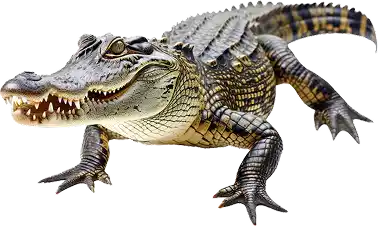
Even crocodiles can live on land and water. They come under the category of reptiles and are among the strongest animals in existence. Their nostrils let them breathe even underwater. The most amazing fact is that they spend most of their lives underwater searching for prey. As land and water animals, they bask to keep their cold bodies at the right temperature while they are on land. They do belly running, i.e., moving quickly or very fast. Their thick, scaly skin protects them from drying out, allowing them to live longer without needing much water.
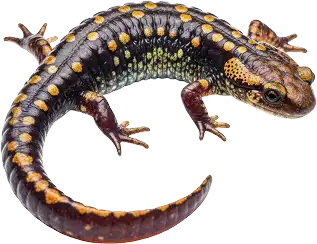
Under the list of land and water animals, the name salamander is the most prominent amphibian. They have a similar look to that of a lizard with elongated bodies and tails. They are mostly found in the northern hemisphere, and their life starts as larvae with external gills that are shaped like feathers. Their lungs expand as they grow older, but for breathing, they use their smooth and moist skin. The adult salamanders prefer to live on damp land, which is cool and moist. Well, they need to go back to the water to breed and keep their skin healthy. However, there are some exceptions attached to it, such as the Axolotl, which is an aquatic animal.
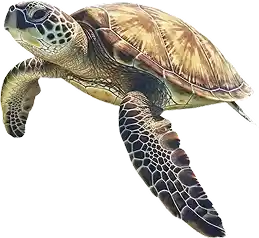
Sea turtles are one of the oldest animals that can live on both land and water. Their exceptional flippers, instead of legs, make them the most versatile and adaptive for life in water. Most of the time, they roam freely in oceans but are very much linked with land, especially the female sea turtles. They travel to long sea beaches where they were born so that they can lay eggs and build nests.
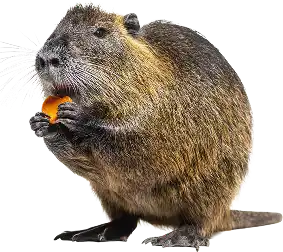
Beavers are semi-aquatic mammals that can live on both land and water. Popularly, they are known as master engineers who know how to build large lodges and dams that give them enhanced safety and food accessibility. Their swimming skills are exceptional because of their adaptive features. This is all possible because of webbed hind feet, wide flat tail that they use to steer and signal, and a special membrane that covers their eyes when they are underwater. However, they require land to acquire building materials like trees and branches for sleeping in their lodges, which are interlinked with the ground.
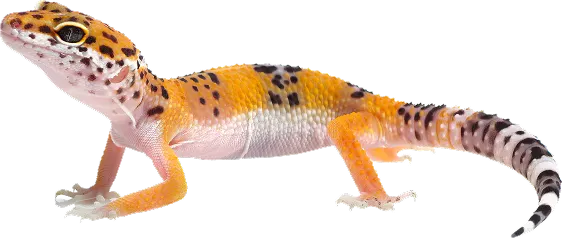
Newts are among the salamander species and are members of the group of amphibious animals. They have three different life stages: mainly aquatic larvae, a terrestrial juvenile phase (eft), and an adult phase where they return to water annually to breed. In the terrestrial stage, newts have a velvety and warty skin texture that fosters gas exchange. Furthermore, they must seek out moist, humid habitats to avoid drying out. This signifies that such species can live on land and in water easily.
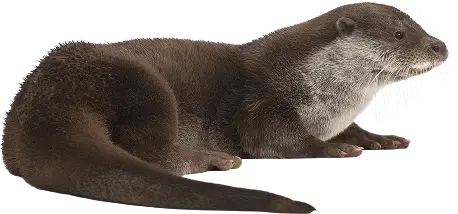
The otter is a mammal that is known to be highly intelligent and playful. Its entire body is designed in a manner that it is known for dual living. Otters have highly powerful webbed paws that help in swimming, and for insulation in cold rivers and coasts, they use their two-layered waterproof fur coat. For survival and food, they hunt fish, and for rest, they come to the shore.
Introducing the concept of land and water animals to kids fosters scientific curiosity in their minds. They can learn about the vast array of species present in this world. Moreover, they will know about their habitats, life cycles, and how we can protect our environment and its surroundings. You can use advanced themes and videos for developing a better understanding instead of just providing bookish knowledge, which may seem boring and outdated after a while. RHK Kids School understands a child’s thought process and always focuses on making lessons interactive. They believe that the philosophy of education should impart correct knowledge and gives a better understanding of a given topic and subject matter.
After knowing about the animals that live on land and water, one thing is clear: there are endless and versatile habitats present on Earth. We only know about a few of them or about common species that we see in our daily lives. For the overall mental development of the child, they must follow a 360-degree approach. They should know about every species, and which among them are on the verge of extinction. For easy understanding and to grasp the concepts, you can show interactive videos to the kids or take them to the zoo. This ensures learning with fun.

Content Writer


 Admission Form For Pre-primary Section
  DOWNLOAD
 Nr Super Society, Ramdev Nagar, Satellite, Ahmedabad, Gujarat 380015
 +91-79-26920026, +91-79-40322444/45/46
 info@rhkkids.com